Diagnostic Procedure
CT-Guided Biopsy Procedure
Minimally Invasive Diagnosis with Precision
Chat with Dr. Apo on FacebookAffiliated hospitals










What is a CT-Guided Biopsy?
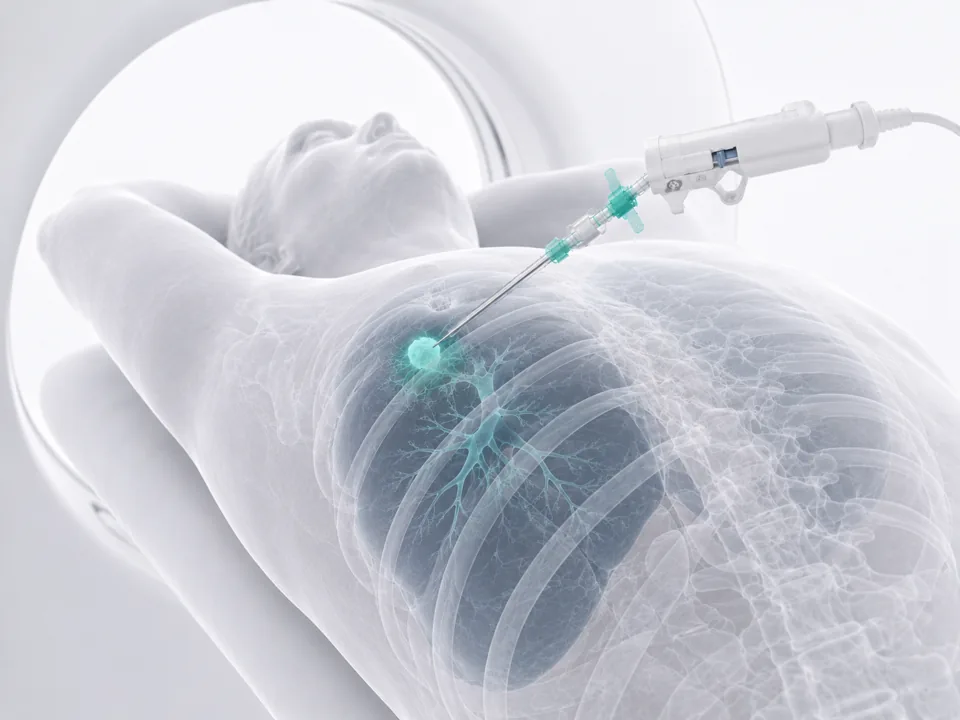
A CT-guided biopsy is a minimally invasive procedure that uses computed tomography (CT) imaging to help accurately locate and extract tissue samples from abnormal areas inside the body. This is especially useful for nodules, masses, or lesions that are difficult to access through traditional methods.
During the procedure, a thin needle is inserted through the skin and directed toward the target area using real-time CT scan guidance. This precision reduces the risk of complications and improves diagnostic accuracy.
Who Is It For?
CT-guided biopsy is ideal for patients who need a precise diagnosis of deep-seated or hard-to-reach lesions—such as in the lungs, liver, bones, lymph nodes, and abdominal organs—and when other techniques (like ultrasound) are not accurate enough. It’s commonly recommended for individuals with:
- Indeterminate or suspicious pulmonary nodules or masses
- Potential metastatic lesions in the chest or bones
- Lesions that cannot be safely biopsied via surgery due to location or patient health
Key Benefits
Common Uses
Clinic Hours
Weekly Schedule
Strictly by Appointment · No Walk-ins
Primary clinic
Olistico Health Manila
Unit 404, West East Center, 1332-1336 Taft Ave, Ermita, Manila
FAQs: CT-Guided Biopsy
How should I prepare for a CT‑guided biopsy?
What can I expect during and immediately after the procedure?
- Expect to lie still inside the CT scanner for 30–60 minutes, including prep, needle insertion, and imaging confirmation.
- You’ll receive local anesthesia, sometimes with mild sedation.
- Once the sample is taken, you’ll be moved to a recovery room. A chest X-ray may be done to ensure there’s no lung collapse.
- Most patients go home the same day once vitals stabilize.
What can I expect during recovery, and when will I get results?
- You might feel soreness or pressure at the biopsy site for a few days.
- Mild pain relief like Tylenol or Ibuprofen is typically sufficient.
- Avoid strenuous activities or heavy lifting for 1 week or as instructed.
- Very slight blood in mucus or at the site may occur initially and should resolve within a few days.
- Tissue results typically return within 2–7 days, with follow-up through your referring doctor.