











What Is PTBD?
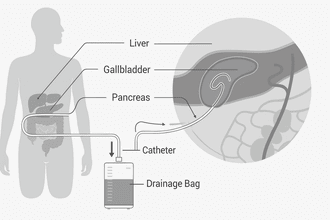
PTBD is a minimally invasive image-guided procedure where a small catheter is inserted through the skin across the liver into a blocked bile duct to enable drainage of bile. This helps relieve pressure in the liver when natural bile flow into the intestine is impaired, commonly due to obstructions—for instance, from tumors or gallstones. Depending on anatomical access, the drainage can be external, internal/external, or through a stent.
Who Is It For?
Patients who are ideal candidates for PTBD include those experiencing obstructive jaundice or bile duct blockages caused by:
- Tumors (pancreatic, bile duct, gallbladder cancer)
- Gallstones lodged within bile pathways
- Strictures, inflammation, or lymph node compression
- Failed ERCP (endoscopic drainage procedures) due to anatomical or surgical constraints
Key Benefits:
- Effective bile decompression, especially when endoscopic maneuvers aren’t feasible
- Can be used as a bridge to chemotherapy or ongoing cancer treatment
- Offers flexible options: external, internal/external, or stent-based drainage
- Helps control symptoms like jaundice, itching, and liver dysfunction
Common Uses:
- Malignant or benign bile duct obstructions
- Preoperative preparation for bile ducts
- Palliative treatment in unresectable tumors
- Failed or contraindicated ERCP cases