













What Is Microwave Ablation?
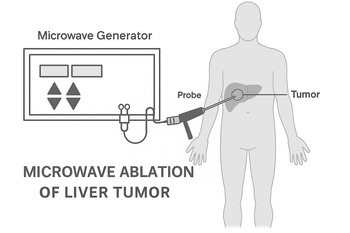
Microwave ablation (MWA) is a minimally invasive procedure where a special probe is inserted through the skin and guided to a tumor using imaging like ultrasound or CT. The probe emits microwave energy, which heats and destroys the cancer cells while sparing surrounding healthy tissue.
It’s typically used for small tumors that are hard to reach surgically—or for patients who want a faster recovery.
Who Is It For?
Microwave ablation may be recommended for patients who:
- Have tumors in the liver, lungs, kidneys, or bones
- Are not candidates for surgery due to health reasons
- Want a fast-recovery treatment with minimal downtime
- Prefer a localized treatment that targets the tumor directly
Key Benefits:
- Minimally invasive: Only a small puncture is needed—no large incision
- Quick procedure: Often done in 1–2 hours
- Outpatient-friendly: Most patients go home within 24 hours
- Fast recovery: Return to daily activities in 2–3 days
- Precise targeting: Microwave energy focuses on the tumor with minimal impact on nearby tissues
Common Uses:
- Liver tumors (primary or metastatic)
- Lung nodules or tumors
- Kidney tumors
- Bone tumors for pain control or local disease management